Buffalo News Editorial Board: DL&W exterior plans are fine, but interior development is unresolved
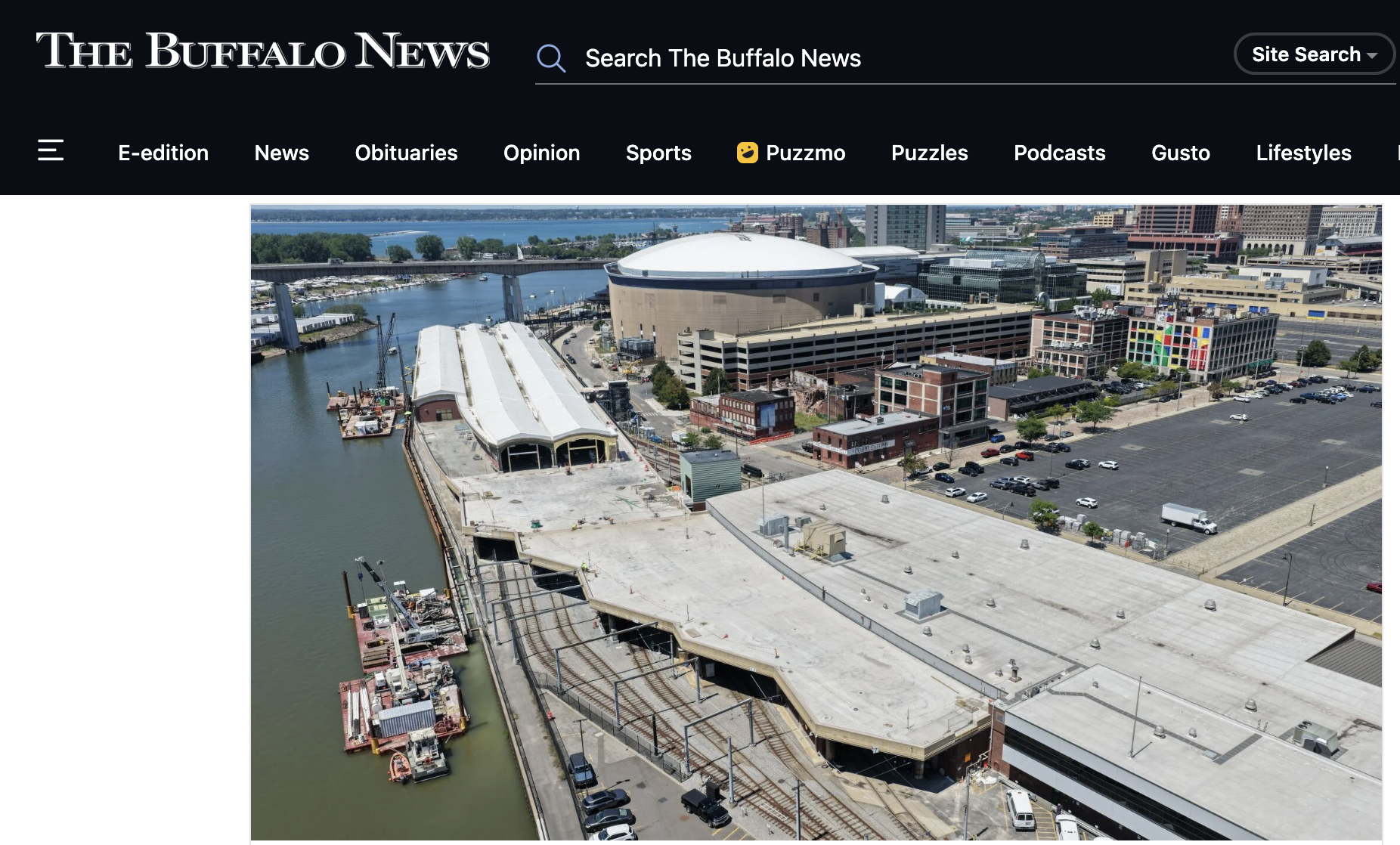
Published August 13, 2026 | Reactivating the Delaware, Lackawanna and Western Railroad Terminal is a welcome development, even if it is one floor at a time. The second-floor exterior event plaza could see its first festivals and other public events this fall.
As reported by The News’ Jonathan D. Epstein, the Niagara Frontier Transportation Authority, which owns the mammoth facility, wants to start hosting activities on the second floor using the roof above the train tracks as a spacious outside deck overlooking the Buffalo River.
The mental image conjures the vast potential of the once-dormant DL&W. The new Metro Rail station has already returned part of the historic terminal to public use, enhanced by three impressive public art installations.
The larger point is the NFTA’s $200 million investment in what has become a multiyear effort to revive the waterfront building for public access. The idea to create a new attraction to bring residents and tourists to the city's waterfront has potential, but as noted, “the vast interior space on the second floor – where trains once arrived at platforms that are now littered with junk – won’t be open or be renovated any time soon.”
The mental image conjures the vast potential of the once-dormant DL&W. The new Metro Rail station has already returned part of the historic terminal to public use, enhanced by three impressive public art installations.
The larger point is the NFTA’s $200 million investment in what has become a multiyear effort to revive the waterfront building for public access. The idea to create a new attraction to bring residents and tourists to the city's waterfront has potential, but as noted, “the vast interior space on the second floor – where trains once arrived at platforms that are now littered with junk – won’t be open or be renovated any time soon.”
That raises important questions about the next phase. What is the NFTA's funding strategy? What commitments have been sought from the state or federal governments? What is the timetable?
Darren Kempner, director of government relations and development for the NFTA, said “The midterm goal is to find that money over the next one to five years.” That’s a potentially long period of uncertainty and while the authority deserves praise for what has been accomplished, taxpayers deserve greater clarity about the next phase.
The second-floor redevelopment raises other lingering questions. The NFTA last November terminated its 2020 predevelopment agreement with Samuel Savarino. He was the only developer to respond to the original request for proposals from the NFTA eight years ago. The NFTA says Savarino failed to comply with the agreement and provide a viable business plan; Savarino disputes that and contends the agreement remains in effect. Whatever the merits of that dispute, redevelopment of the 80,000-square-foot interior is stalled.
It's regrettable that the NFTA and Savarino seem unable to work out their differences.
In the meantime, an incremental strategy makes sense; waiting until every piece of a huge redevelopment is finished would leave another Buffalo landmark inaccessible for years.
Open what can safely be opened now. Build public interest. Connect it to KeyBank Center and the waterfront. But incremental progress cannot become a substitute for a plan to finish the job.
Activating the exterior deck is another meaningful step in returning this remarkable building to Buffalo. The NFTA deserves credit for getting that much done. But given the scale of the public investment, Buffalo also deserves a credible plan for the unfinished interior – including a resolution of the developer dispute, a strategy for finding the missing stabilization money and a realistic timetable for putting the entire second floor back to use.