Case Study: Armature Works
Waterfront transit infrastructure repurposed as a daily-use public hub.
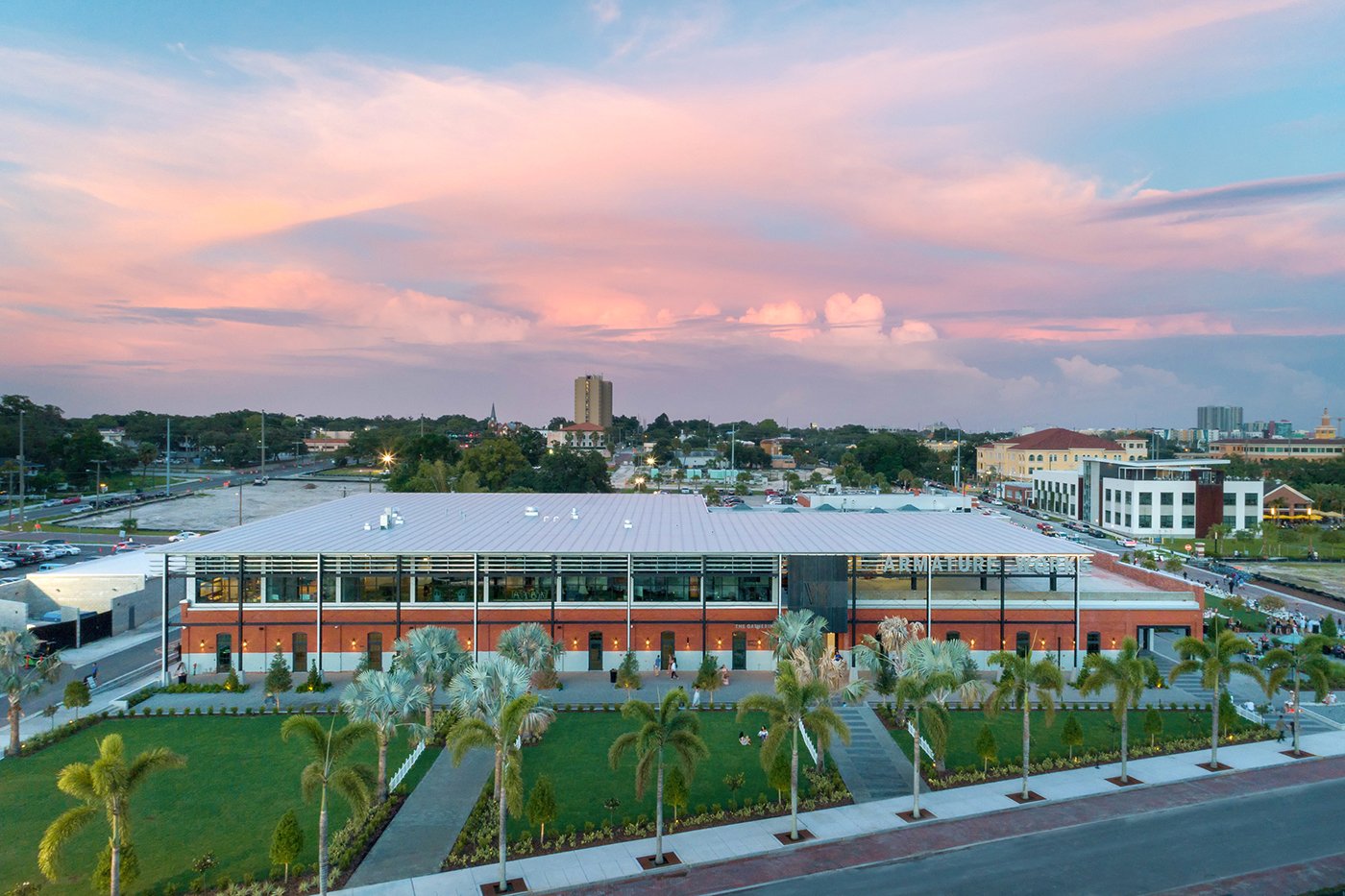
Armature Works sits on the Hillsborough River in Tampa, FL, a city of 414,547 residents. The building, constructed in 1910 as a streetcar-era industrial facility connected to the city’s transportation network, was later restored as a public-facing, mixed-use destination. Beyond the building itself, Armature Works is positioned as the anchor of a larger district-scale environment and is linked to the Tampa Riverwalk, benefiting from steady foot traffic along the water and between nearby destinations.
Program of Spaces
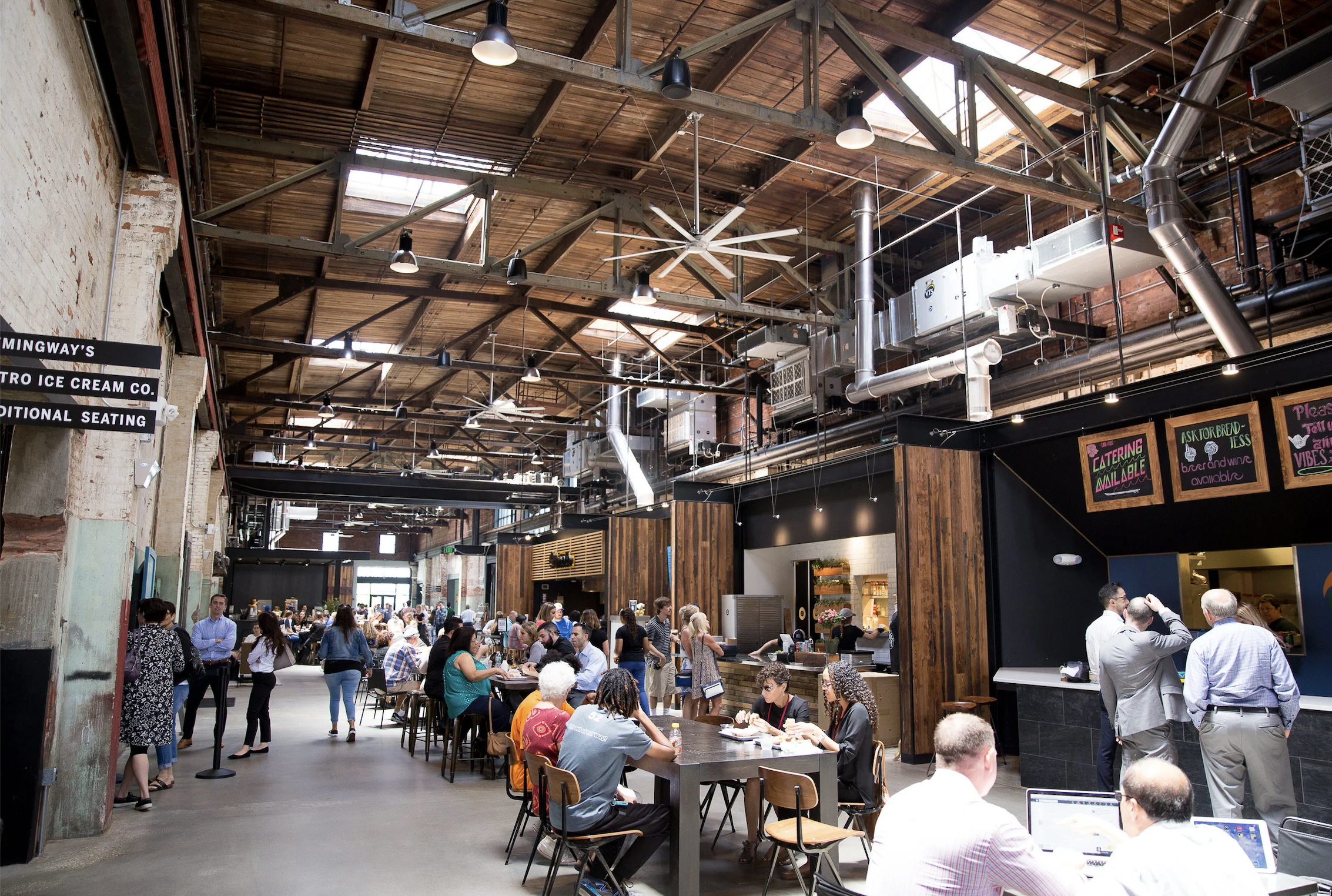
22,000 sq. ft. food market with 16 vendors
Three restaurants
800-seat banquet hall
200-seat event space
12,000 sq. ft. co-working office space
3-acre riverfront plaza designed to host public activity and special events
Operations & Public Use
Armature Works is designed to accommodate multiple usage patterns simultaneously. The food market supports short, informal visits, while restaurants and event spaces extend activity into evenings and weekends. Co-working and open seating support weekday use, while the outdoor area/riverfront plaza accommodates both programmed and incidental activities associated with the Riverwalk. The building remains accessible throughout the day, allowing visitors to combine activities rather than making single-purpose trips.
Impact
In its first year, Armature Works reported welcoming more than 1 million visitors, with daily attendance averaging 2,000–3,000 and weekend attendance peaks of 10,000–15,000. The venue hosts hundreds of private and public events annually, including weddings, corporate functions, and community programming, which establishes consistent activity. Its integration with the Riverwalk and surrounding development ensures baseline foot traffic, while its internal mix of uses supports extended stays and repeat visitation.
What its success says about the DL&W project
Armature Works shows how a waterfront-adjacent, transit-era structure can thrive when the program is built to intercept existing movement and turn it into reasons to stay. The DL&W site already benefits from adjacency, circulation, and visitor patterns tied to the waterfront, Key Bank Arena, the Metro Rail, and downtown. When food, social space, events, and everyday utility are layered in one place, performance becomes far more predictable.
Review our other case studies:
City Foundry STL—St. Louis, MO
Mercato Metropolitano—London, England
Denver Union Station—Denver, CO