Case Study: Denver Union Station
Transit-oriented redevelopment as a city hub.
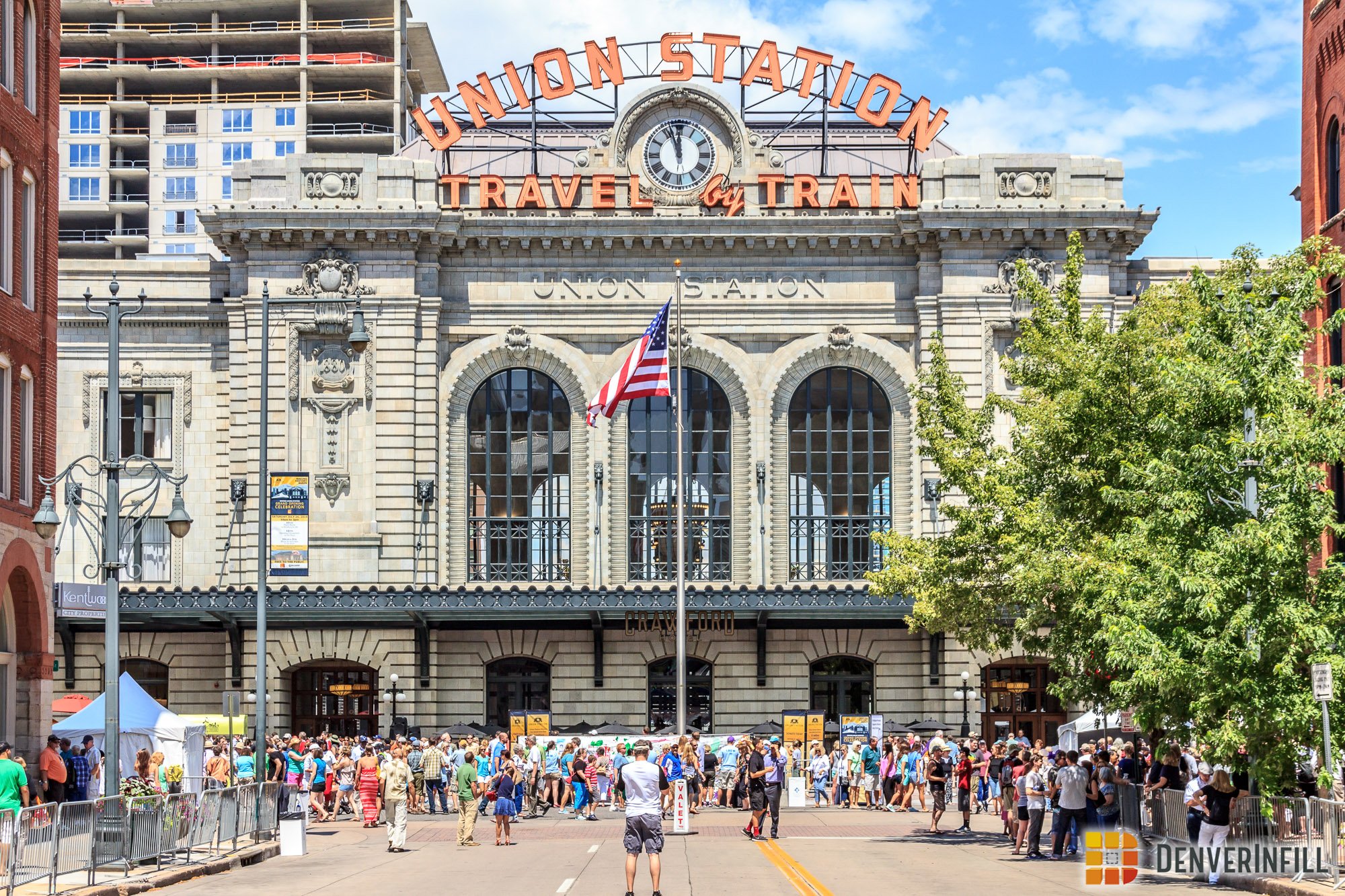
Denver Union Station is a historic transportation landmark located at the western edge of downtown Denver (pop. 729,000, 2024 estimate). Originally opened in 1881 as the Denver Union Depot, the station was rebuilt following a 1894 fire and launched in its current Beaux-Arts form in 1914. For much of the 20th century, it served as the city’s primary rail gateway, welcoming tens of thousands of passengers daily at the height of rail travel.
As rail use declined in the latter half of the century, the station and surrounding rail yards fell into disuse. Beginning in the early 2000s, a coordinated public redevelopment effort set out to reestablish the station as both a transportation hub and a civic center. The reimagined Denver Union Station reopened in 2014, marking 100 years since the 1914 structure's opening and transforming approximately 20 to 50 acres of former rail yards into a regional transit-oriented district.
Program of Spaces
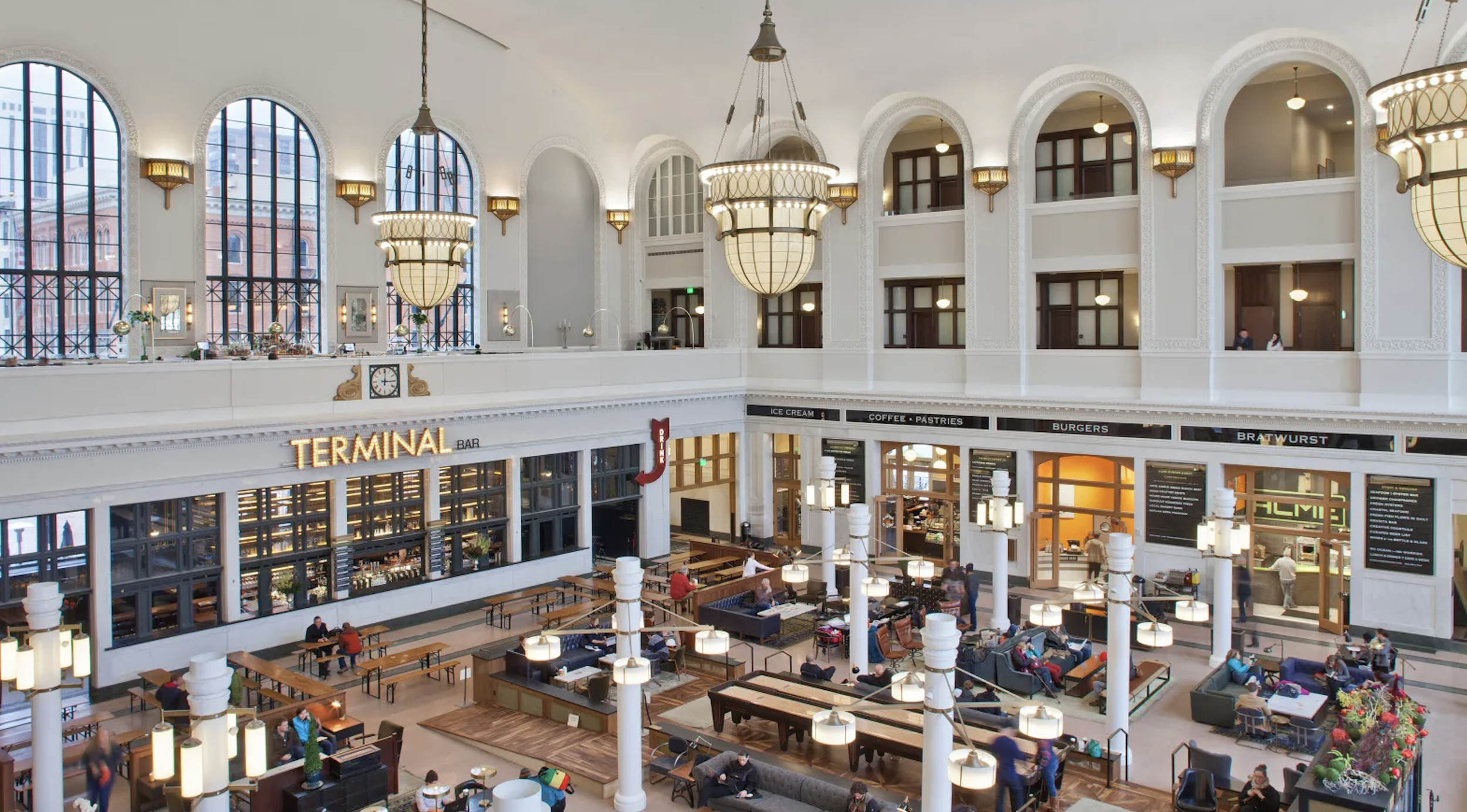
Historic Great Hall with approximately 12,000 sq ft of publicly accessible space
Restaurants, bars, cafés, and retail are integrated into the station (approximately 10 outlets)
Intermodal transit hub including commuter rail, light rail, and a 22-bay underground bus concourse
Crawford Hotel, a 112-room hotel, is located within the historic station building
Open-air train hall, pedestrian promenades, plazas, and outdoor dining areas
Operations & Public Use
Denver Union Station functions as a continuously active public environment rather than a single-purpose transit facility. The historic Great Hall serves as a central gathering space throughout the day, supporting informal meetings, dining, and waiting alongside programmed and incidental use. Transit operations bring consistent daily foot traffic, while dining, retail, and hospitality extend activity beyond peak commute hours.
Pedestrian connections link the station to surrounding neighborhoods and adjacent developments, enabling the site to absorb foot traffic from downtown, nearby residential areas, and regional transit users. The layering of transportation, food, hospitality, and public space enables the station to function as both an arrival point and a destination.
Impact
The Denver Union Station redevelopment represents a $490–500 million public investment and has catalyzed more than 1.5 million square feet of surrounding mixed-use development. Today, the station attracts more than 10 million visitors annually and serves as a major transit hub, hotel, dining destination, and civic space. The project has played a central role in revitalizing Denver’s Lower Downtown and adjacent districts, supporting sustained private-sector investment and higher urban density.
What its success says about the DL&W project
Denver Union Station illustrates how a historic transportation asset can be repositioned as a high-performing civic anchor when mobility, food, hospitality, and public space are integrated within a single, well-connected site. Its success reflects the power of transit-oriented design paired with layered, everyday programming—showing how existing movement patterns can be converted into consistent use and long-term relevance.
Review our other case studies:
Armature Works—Tampa, FL
City Foundry STL—St. Louis, MO
Mercato Metropolitano—London, England